

 DMCA
DMCA
 FAQ
FAQ
 Webapp Installation
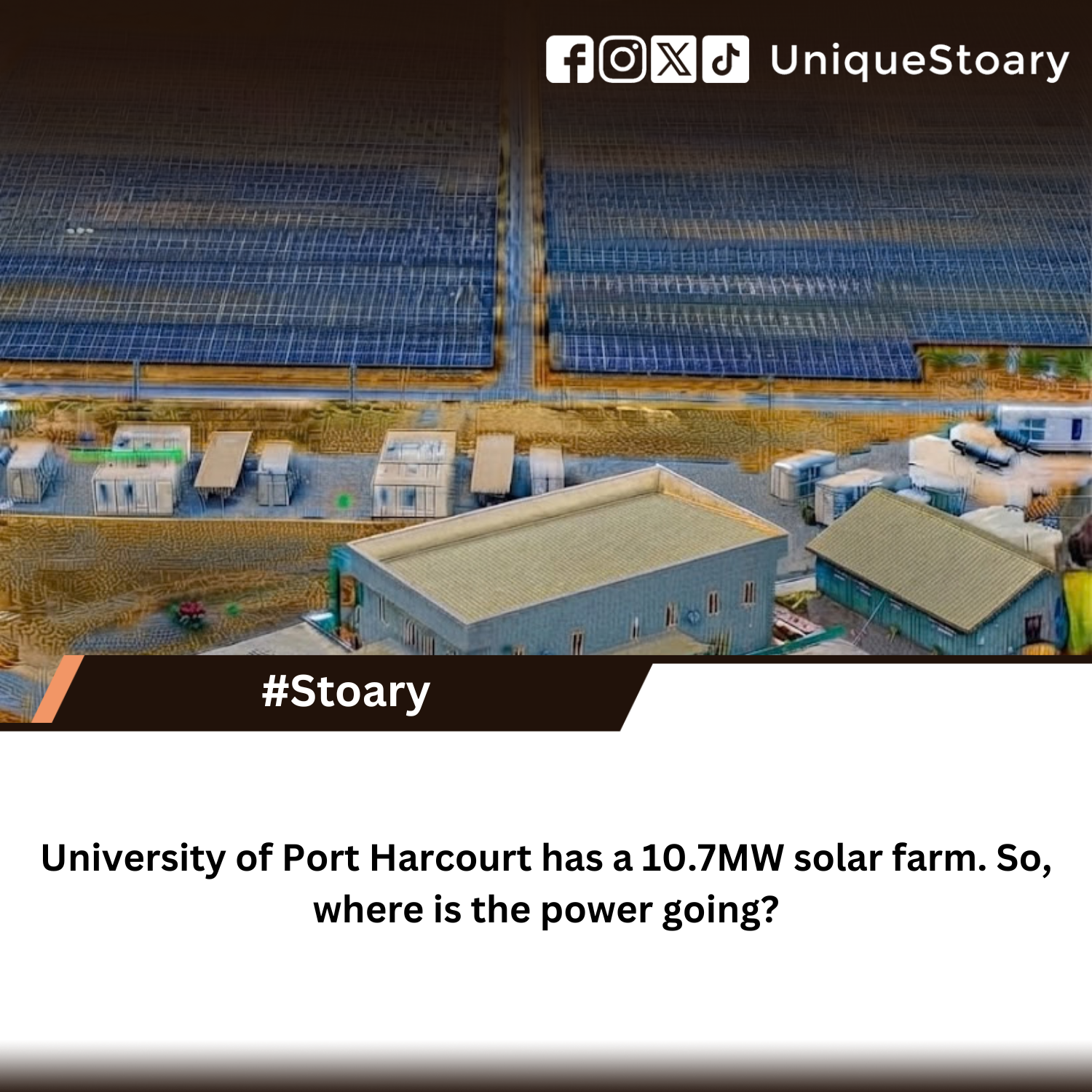
Uniport has A 10.7MW solar farm. So, where is the power going?
At Unipark (Abuja Campus) of the University of Port Harcourt, sits a major solar power installation that was designed to tackle one of the University's long-standing challenges: electricity.
But with continuing complaints about poor or inconsistent power supply across parts of the University, one question is increasingly difficult to ignore: What exactly is happening with the Unipark Solar Farm?
This is not an accusation.
It is a question worth investigating.
According to project records submitted to the Nigerian Electricity Management Services Agency (NEMSA), the Uniport solar project has an installed capacity of approximately 10.78MW, with 16,212 solar PV modules.
NEMSA's project record also lists expected solar energy production of approximately 54,000kWh per day.
The project includes more than solar panels. Its infrastructure includes battery energy storage, a rehabilitated 15MVA injection substation, a dedicated 33kV feeder and downstream distribution infrastructure.
In simple terms; the project was designed to generate power and move that power into the University's electricity network.
In 2025, the University repeatedly described the project as a major intervention for its electricity challenge.
In August 2025, Uniport reported discussions around “solar power distribution to UPTH and host communities”, with the University expressing hope for imminent commissioning and appropriate distribution.
By November 2025, Uniport announced: “Uniport Activates Solar Power System for Uninterrupted Electricity Supply.”
The University said the system was designed to strengthen electricity supply across key academic and administrative areas.
So, what happened next?
The African Development Bank later reported that the Uniport 10.77MW solar hybrid system began trial operations in December 2025.
And there was a measurable financial impact.
According to the AfDB, Uniport's monthly electricity expenditure reportedly dropped from approximately: ₦150 MILLION → ₦100 MILLION
The Bank also reported that electricity distribution was active across the University campus.
That is important evidence that the solar system is not simply a collection of panels sitting at Unipark. It is producing and distributing electricity.
But there is an important “however”
The same AfDB report stated that while electricity distribution was active across the University campus, integration of the University of Port Harcourt Teaching Hospital (UPTH) was still progressing.
This matters because the project was designed to serve both Uniport and UPTH.
UPTH's Chief Medical Director, Professor Chituru Orluwene, was quoted by the AfDB as saying: “Our core mandate is service, research, and training, and none can function effectively without stable electricity.” He said the hospital looked forward to its integration into the system.
So, as of that report, the University campus and UPTH were not necessarily at the same stage of integration.
•• Then Why Are There Still Power Complaints?
This is where we need to be careful.
The existence of a 10.78MW solar plant does not mean that every building on campus receives 10.78MW continuously.
Solar generation varies. Demand varies. Battery storage has limits. Distribution infrastructure has limits.
...[Full stoary on our Facebook page @uniquestoary.]
Unique Stoary...digital heartbeat of Uniport.
📌 Join the Unique Stoary Community on Telegram let's have real time discussions on latest happenings and matters arising in Uniport. Click on this link to join https://t.me/uniquestoary
_____________________________________________
We have a WhatsApp channel. Do well to follow for exclusive offers, placements and real time updates;
https://whatsapp.com/channel/0029VbAYOmR05MUbjMcimM00
_____________________________________________
#UniqueStoary #Stoary #Uniport #ABetterUniport #Campus #CampusGist #CampusLife #CampusUpdate
#UniversityOfPortHarcourt
At Unipark (Abuja Campus) of the University of Port Harcourt, sits a major solar power installation that was designed to tackle one of the University's long-standing challenges: electricity.
But with continuing complaints about poor or inconsistent power supply across parts of the University, one question is increasingly difficult to ignore: What exactly is happening with the Unipark Solar Farm?
This is not an accusation.
It is a question worth investigating.
According to project records submitted to the Nigerian Electricity Management Services Agency (NEMSA), the Uniport solar project has an installed capacity of approximately 10.78MW, with 16,212 solar PV modules.
NEMSA's project record also lists expected solar energy production of approximately 54,000kWh per day.
The project includes more than solar panels. Its infrastructure includes battery energy storage, a rehabilitated 15MVA injection substation, a dedicated 33kV feeder and downstream distribution infrastructure.
In simple terms; the project was designed to generate power and move that power into the University's electricity network.
In 2025, the University repeatedly described the project as a major intervention for its electricity challenge.
In August 2025, Uniport reported discussions around “solar power distribution to UPTH and host communities”, with the University expressing hope for imminent commissioning and appropriate distribution.
By November 2025, Uniport announced: “Uniport Activates Solar Power System for Uninterrupted Electricity Supply.”
The University said the system was designed to strengthen electricity supply across key academic and administrative areas.
So, what happened next?
The African Development Bank later reported that the Uniport 10.77MW solar hybrid system began trial operations in December 2025.
And there was a measurable financial impact.
According to the AfDB, Uniport's monthly electricity expenditure reportedly dropped from approximately: ₦150 MILLION → ₦100 MILLION
The Bank also reported that electricity distribution was active across the University campus.
That is important evidence that the solar system is not simply a collection of panels sitting at Unipark. It is producing and distributing electricity.
But there is an important “however”
The same AfDB report stated that while electricity distribution was active across the University campus, integration of the University of Port Harcourt Teaching Hospital (UPTH) was still progressing.
This matters because the project was designed to serve both Uniport and UPTH.
UPTH's Chief Medical Director, Professor Chituru Orluwene, was quoted by the AfDB as saying: “Our core mandate is service, research, and training, and none can function effectively without stable electricity.” He said the hospital looked forward to its integration into the system.
So, as of that report, the University campus and UPTH were not necessarily at the same stage of integration.
•• Then Why Are There Still Power Complaints?
This is where we need to be careful.
The existence of a 10.78MW solar plant does not mean that every building on campus receives 10.78MW continuously.
Solar generation varies. Demand varies. Battery storage has limits. Distribution infrastructure has limits.
...[Full stoary on our Facebook page @uniquestoary.]
Unique Stoary...digital heartbeat of Uniport.
📌 Join the Unique Stoary Community on Telegram let's have real time discussions on latest happenings and matters arising in Uniport. Click on this link to join https://t.me/uniquestoary
_____________________________________________
We have a WhatsApp channel. Do well to follow for exclusive offers, placements and real time updates;
https://whatsapp.com/channel/0029VbAYOmR05MUbjMcimM00
_____________________________________________
#UniqueStoary #Stoary #Uniport #ABetterUniport #Campus #CampusGist #CampusLife #CampusUpdate
#UniversityOfPortHarcourt
Uniport has A 10.7MW solar farm. So, where is the power going?
At Unipark (Abuja Campus) of the University of Port Harcourt, sits a major solar power installation that was designed to tackle one of the University's long-standing challenges: electricity.
But with continuing complaints about poor or inconsistent power supply across parts of the University, one question is increasingly difficult to ignore: What exactly is happening with the Unipark Solar Farm?
This is not an accusation.
It is a question worth investigating.
According to project records submitted to the Nigerian Electricity Management Services Agency (NEMSA), the Uniport solar project has an installed capacity of approximately 10.78MW, with 16,212 solar PV modules.
NEMSA's project record also lists expected solar energy production of approximately 54,000kWh per day.
The project includes more than solar panels. Its infrastructure includes battery energy storage, a rehabilitated 15MVA injection substation, a dedicated 33kV feeder and downstream distribution infrastructure.
In simple terms; the project was designed to generate power and move that power into the University's electricity network.
In 2025, the University repeatedly described the project as a major intervention for its electricity challenge.
In August 2025, Uniport reported discussions around “solar power distribution to UPTH and host communities”, with the University expressing hope for imminent commissioning and appropriate distribution.
By November 2025, Uniport announced: “Uniport Activates Solar Power System for Uninterrupted Electricity Supply.”
The University said the system was designed to strengthen electricity supply across key academic and administrative areas.
So, what happened next?
The African Development Bank later reported that the Uniport 10.77MW solar hybrid system began trial operations in December 2025.
And there was a measurable financial impact.
According to the AfDB, Uniport's monthly electricity expenditure reportedly dropped from approximately: ₦150 MILLION → ₦100 MILLION
The Bank also reported that electricity distribution was active across the University campus.
That is important evidence that the solar system is not simply a collection of panels sitting at Unipark. It is producing and distributing electricity.
But there is an important “however”
The same AfDB report stated that while electricity distribution was active across the University campus, integration of the University of Port Harcourt Teaching Hospital (UPTH) was still progressing.
This matters because the project was designed to serve both Uniport and UPTH.
UPTH's Chief Medical Director, Professor Chituru Orluwene, was quoted by the AfDB as saying: “Our core mandate is service, research, and training, and none can function effectively without stable electricity.” He said the hospital looked forward to its integration into the system.
So, as of that report, the University campus and UPTH were not necessarily at the same stage of integration.
•• Then Why Are There Still Power Complaints?
This is where we need to be careful.
The existence of a 10.78MW solar plant does not mean that every building on campus receives 10.78MW continuously.
Solar generation varies. Demand varies. Battery storage has limits. Distribution infrastructure has limits.
...[Full stoary on our Facebook page @uniquestoary.]
Unique Stoary...digital heartbeat of Uniport.
📌 Join the Unique Stoary Community on Telegram let's have real time discussions on latest happenings and matters arising in Uniport. Click on this link to join https://t.me/uniquestoary
_____________________________________________
We have a WhatsApp channel. Do well to follow for exclusive offers, placements and real time updates;
https://whatsapp.com/channel/0029VbAYOmR05MUbjMcimM00
_____________________________________________
#UniqueStoary #Stoary #Uniport #ABetterUniport #Campus #CampusGist #CampusLife #CampusUpdate
#UniversityOfPortHarcourt