 DMCA
DMCA
 FAQ
FAQ
 Webapp Installation
Can You Really Get a Job After Graduating From a Nigerian University? What Employers Want in 2026
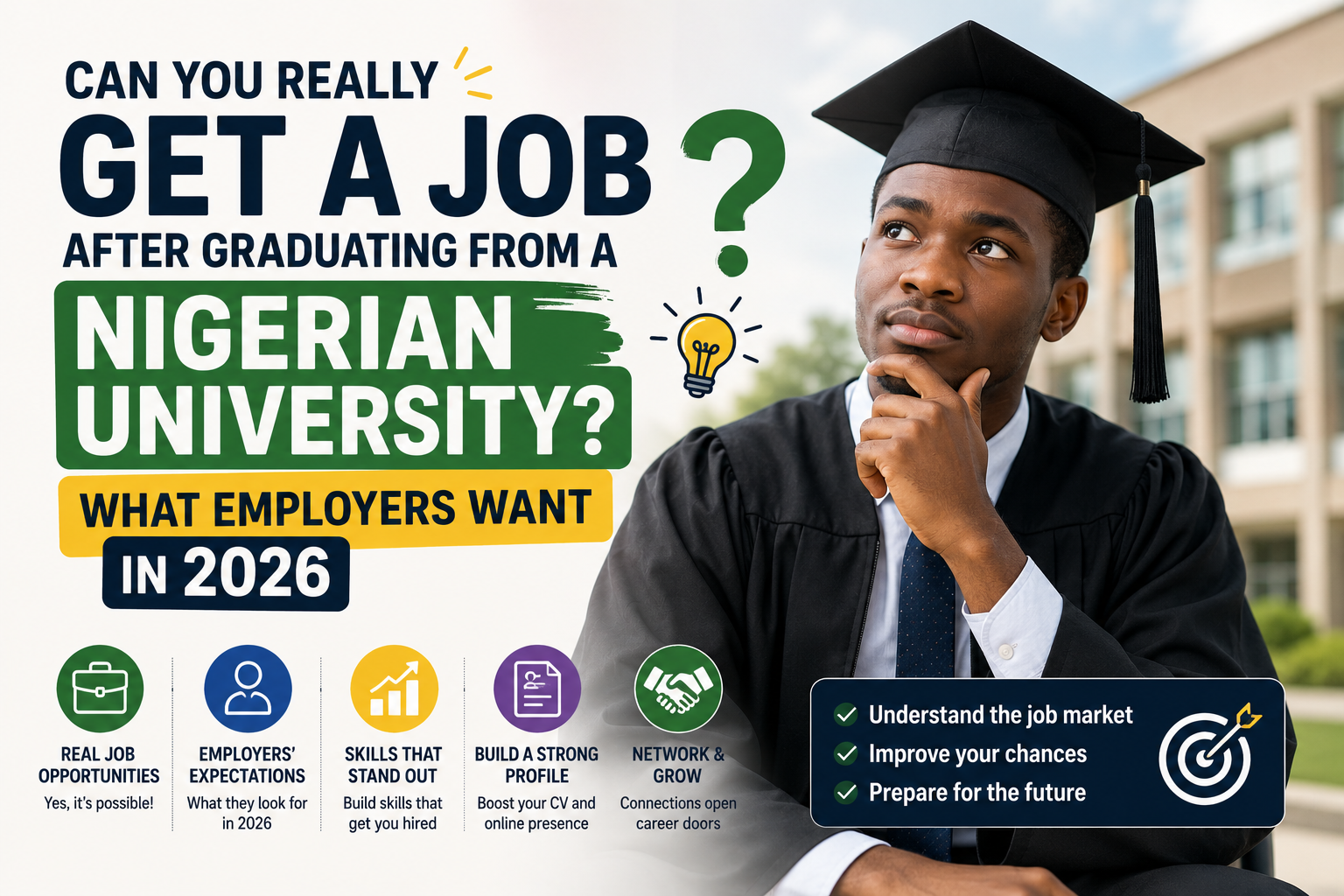

Can You Really Get a Job After Graduating From a Nigerian University? What Employers Want in 2026
Many graduates worry about unemployment after university. Discover the realities of Nigeria's job market in 2026, what employers are looking for, and practical steps graduates can take to improve their chances of getting hired.
One of the most common questions Nigerian students ask is: "Will I actually get a job after graduating?"
With frequent discussions about unemployment, economic challenges, and competition for available positions, it's understandable why many students feel uncertain about their future. However, while finding employment may be competitive, thousands of Nigerian graduates continue to secure jobs, internships, remote opportunities, graduate trainee positions, and freelance careers every year.
The reality is that employers in 2026 are looking for more than just a university degree. Academic qualifications remain important, but practical skills, communication ability, problem-solving, digital literacy, and relevant experience often determine who gets hired.
In this guide, you'll learn:
- The current reality of graduate employment in Nigeria
- Why some graduates struggle to find jobs
- The skills employers want in 2026
- How students can prepare before graduation
- Ways to stand out from other applicants
- Alternative career paths beyond traditional employment
The Truth About Graduate Employment in Nigeria
Yes, graduates can still get jobs after university. However, the employment market has changed significantly over the last decade.
Employers receive hundreds or even thousands of applications for a single position. As a result, having a degree alone is often no longer enough to guarantee employment.
Organizations increasingly seek candidates who can demonstrate practical abilities, adaptability, communication skills, and familiarity with modern workplace technologies.
💡 Important: A degree opens doors, but employers often hire candidates who combine education with relevant skills, experience, and initiative.

Why Some Graduates Struggle to Find Jobs
Several factors contribute to graduate unemployment and underemployment:
- Limited practical experience
- Lack of digital skills
- Poor interview preparation
- Weak professional networks
- Generic CVs and applications
- Applying only to a narrow range of jobs
- Failure to build a professional online presence
Many employers prefer candidates who can demonstrate how they have applied their knowledge through internships, projects, volunteering, freelancing, leadership roles, or extracurricular activities.
What Employers Want From Graduates in 2026
While requirements vary by industry, several skills consistently appear in employer surveys and recruitment trends.
1. Communication Skills
Employers value candidates who can communicate clearly through speaking, writing, presentations, emails, and teamwork.
2. Digital Literacy
Basic digital competence is now expected across many industries. Graduates should be comfortable using productivity software, online collaboration tools, cloud platforms, and digital communication systems.
3. Problem-Solving Ability
Organizations seek employees who can analyze situations, identify solutions, and contribute positively to business objectives.
4. Adaptability
Technology and industries change rapidly. Employers increasingly value graduates who can learn quickly and adapt to new systems and processes.
5. Teamwork and Collaboration
Most workplaces require employees to collaborate effectively with colleagues, clients, managers, and stakeholders.

How Students Can Prepare Before Graduation
The best time to prepare for employment is before graduation, not after it.
Students can improve their career prospects by:
- Taking internships during holidays
- Learning relevant digital skills
- Building a professional LinkedIn profile
- Participating in student organizations
- Completing personal projects
- Attending career development events
- Networking with professionals
Build Your Professional Presence Early
Today's employers often look beyond academic transcripts. They may review portfolios, project work, leadership experience, professional profiles, and evidence of practical skills.
Student communities such as Cikamo provide opportunities to connect with fellow students, discover educational resources, participate in academic discussions, share useful study materials, and build a stronger academic profile while still in school.
Developing a visible track record of learning, collaboration, and skill development can help graduates stand out in a competitive job market.
The Importance of Internships and Experience
Experience remains one of the strongest advantages a graduate can have.
Even short internships, volunteer work, freelance projects, campus leadership positions, and personal projects can demonstrate initiative and practical capability.
Employers often prefer candidates who have applied their knowledge in real-world situations rather than relying solely on academic qualifications.
Alternative Career Paths Beyond Traditional Employment
Not every graduate follows a traditional path into full-time employment immediately after university.
Many graduates build successful careers through:
- Freelancing
- Remote work
- Technology careers
- Content creation
- Consulting services
- Entrepreneurship
- Digital product creation
The growth of the digital economy has created opportunities that were unavailable to previous generations of graduates.

Common Mistakes Graduates Should Avoid
- Relying only on their degree
- Ignoring skill development
- Sending the same CV to every employer
- Neglecting networking opportunities
- Poor interview preparation
- Failing to build an online professional presence
- Giving up too quickly after rejection
Final Thoughts
Can you really get a job after graduating from a Nigerian university? Absolutely. However, success increasingly depends on more than academic qualifications alone.
Graduates who continuously develop practical skills, gain experience, build professional networks, and stay adaptable are often better positioned to succeed in today's competitive employment market.
Start preparing early, invest in skill development, take advantage of learning opportunities, and focus on building value. The more problems you can solve, the more attractive you become to employers.
🎓 Looking for study resources, career tips, student communities, educational discussions, and opportunities to grow your academic profile? Explore Cikamo and connect with students building their future careers.